History of Burlingame
Burlingame State Park began in 1930 as a state wildlife preserve around Watchaug Pond and opened in 1934 as Burlingame State Reservation. RI DEM says its 3,100 acres became Rhode Island's first camping ground. It is named after Edwin A. Burlingame, longtime chair of the Metropolitan Park Commission. In the 1930s it was home to the state's first Civilian Conservation Corps camp.
History at a Glance
Before the Park
DEM's history starts with the road. From 1702 to 1902 there was essentially one main road along Rhode Island's Atlantic coast, the Boston Post Road, known today as Scenic 1A. It separated the flat meadows and salt ponds of Charlestown and South Kingstown from the wooded, rock-strewn uplands to the north.
In the 1700s the coastal meadows from Point Judith to Westerly were farmed by the Narragansett Planters, large families such as the Robinsons, Hazards, Champlins, Babcocks and Stantons, who raised sheep, cattle and the Narragansett Pacer horse. The barrier beaches and salt ponds were not seen as places for recreation until late in the 1800s, when summer visitors began renting homes and pitching tents by the sea.
A Park System Reaches South County
Rhode Island's state park system was created in 1904, and at first the Metropolitan Park Commission focused on parks around Providence linked by parkways. About 25 years later it looked further south. It did not start with the beaches, but with the woods and rocks north of Route 1.
The trigger was the Audubon Society, which created the Kimball Wildlife Sanctuary beside Watchaug Pond in 1927. Following that lead, the Commission began buying woodland around the pond, piece by piece, by purchase and by condemnation. One purchase was a private club, Chomowauke Lodge, with 498 acres; under the deal, the state did not get full ownership until 1960. U.S. Senator Theodore Francis Green was the club's last member to join, in September 1930, and the last to die.
In 1930 the land was a wildlife preserve. By 1934 it had opened as Burlingame State Reservation. DEM says the 3,100 acres grew into the state's first camping ground, named for the Commission's longtime chair, Edwin A. Burlingame.
The Civilian Conservation Corps
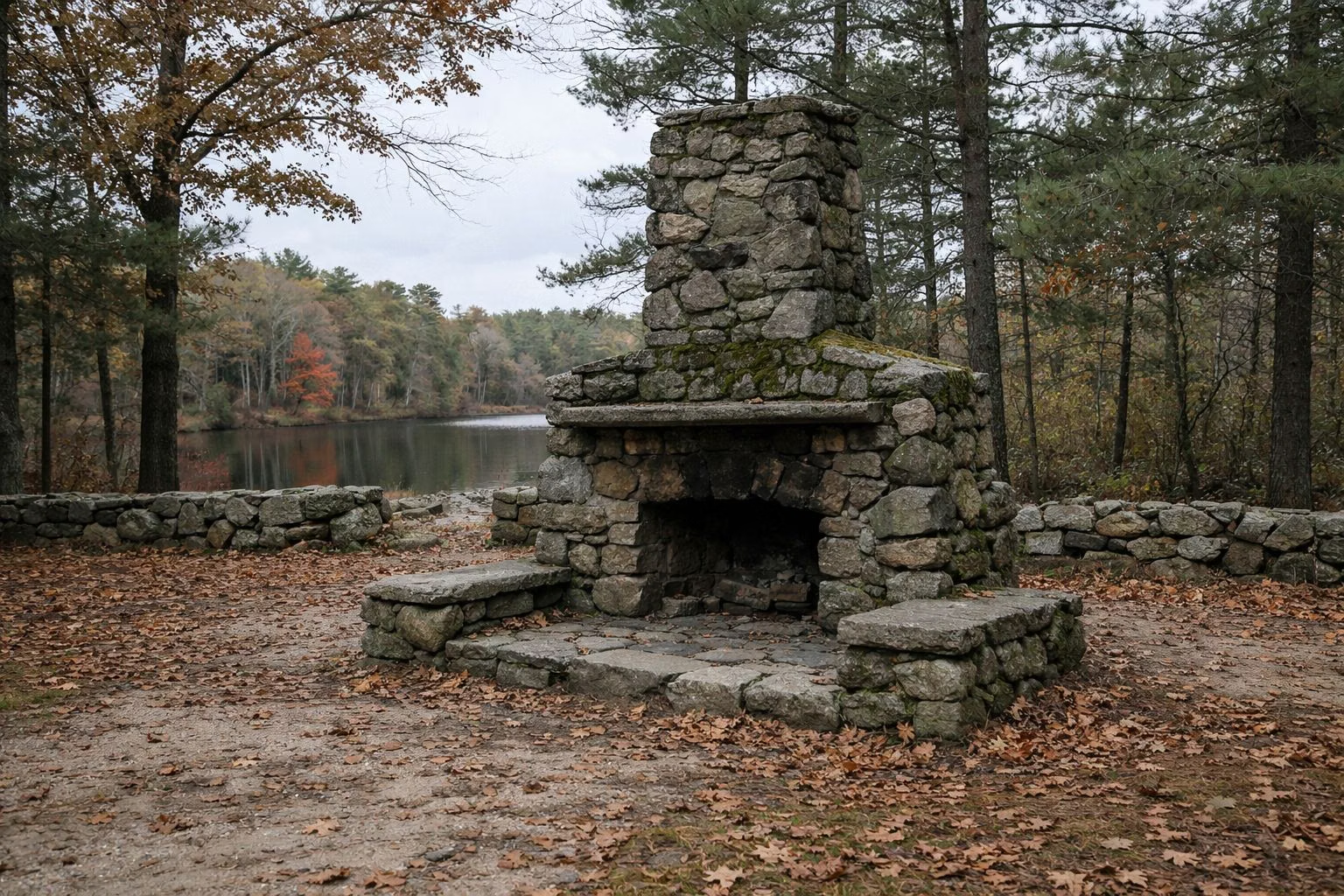
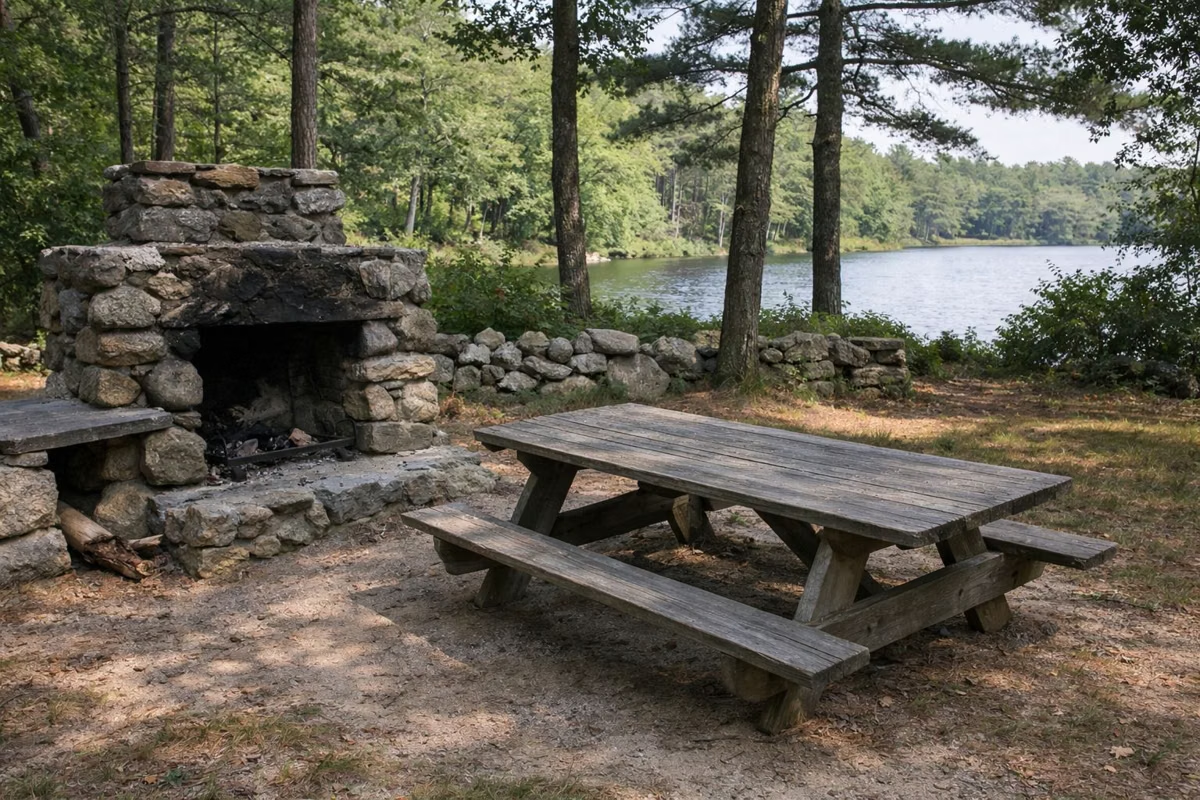
During the Depression, Burlingame became home to the 141st Company of the Civilian Conservation Corps. It was Rhode Island's first CCC camp, the state headquarters, and one of five camps in the state. From 1933, young men in their late teens and early twenties built roads and trails, fireplaces, campsites and picnic areas, and improved the beaches of Watchaug Pond. They also worked in the forests, especially after the Hurricane of 1938 knocked down thousands of trees and wrecked roads.
Some of that work is still in use. DEM's photos of the picnic area show a historic CCC cabin and rustic cooking fire pits. The CCC was disbanded in 1942, when the country needed the manpower for World War II.
World War II
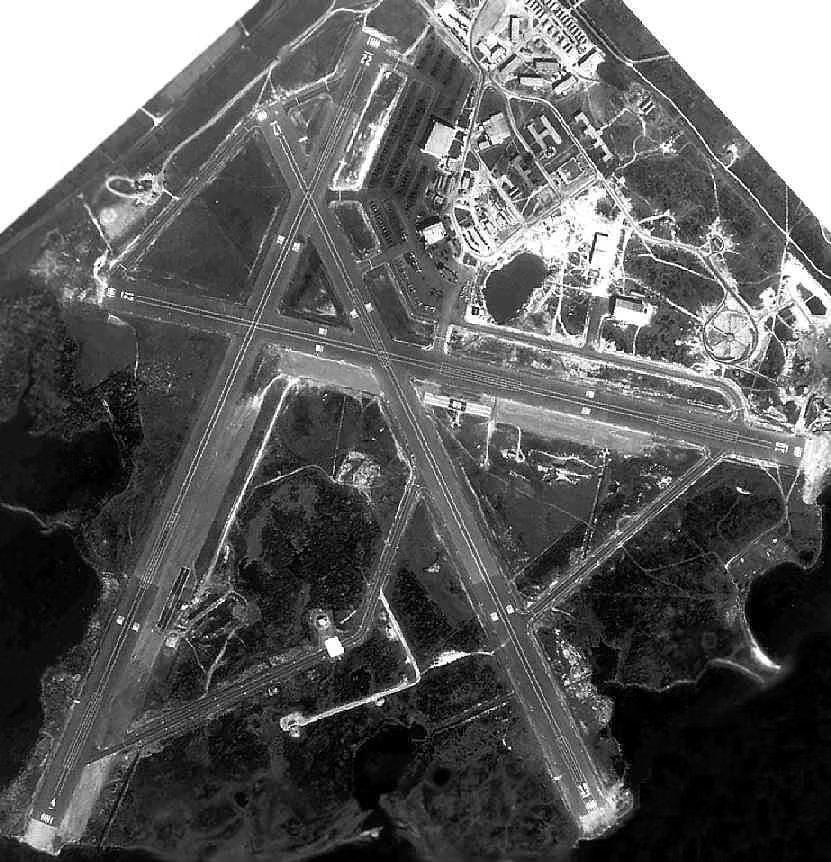
Burlingame's location next to the Charlestown Naval Air Station put it to work during the war. DEM says it housed Navy personnel, served as an army camp, was a rest stop for British Navy sailors, and even did duty as a prisoner of war camp. Next door, the U.S. Fish and Wildlife Service's Ninigret National Wildlife Refuge sits on what it calls the former Charlestown Naval Auxiliary Landing Facility, and its trails still cross the old runways (refuge).
Legion Town
After the war, part of the park became an American Legion youth summer camp. "Legion Town" reused buildings left by the CCC from 1946 until 1961. The campground's Legiontown area keeps the name (map). For many years, DEM adds, every Christmas tree used at the Rhode Island State House at the holidays came from Burlingame.
Upgrades
In 1991 DEM began a four-phase upgrade of the campsites, sanitary systems and maintenance buildings, some of which dated to the 1930s, using National Park Service grants and Rhode Island's Recreation Area Development Funds. Federal EPA and DEM funds have also paid to study Watchaug Pond's yearly cycle so its water quality can be monitored.
The latest round is the restroom rebuild of 2023 to 2027: six new shower and restroom buildings, an $18 million project funded mainly by the voter-approved 2021 Beach, Clean Water and Green Economy Bond and a federal Land and Water Conservation Fund grant (campground).
The Park Today
DEM now calls Burlingame one of Rhode Island's first campgrounds and one of the biggest campgrounds in the eastern United States. Its activities are the ones the CCC built for: camping, swimming, fishing, picnicking, boating and hiking. The land north of Buckeye Brook Road, along the Pawcatuck River, remains mainly a hunting area.
Nature Then and Now
DEM's history lists white-tailed deer, red fox, river otter, mink and muskrat among the park's mammals, as many as 80 nesting bird species, and wintering bald eagles on Watchaug Pond. See Watchaug Pond and hiking.
History of Burlingame FAQ
When did Burlingame State Park open?
In 1934, as Burlingame State Reservation. The land had been set aside as a wildlife preserve in 1930, and DEM says it became Rhode Island's first camping ground.
Who is Burlingame State Park named after?
Edwin A. Burlingame, the longtime chair of Rhode Island's Metropolitan Park Commission, which built the early state park system.
Did the CCC build Burlingame State Park?
The Civilian Conservation Corps' 141st Company, Rhode Island's first CCC camp, was based at Burlingame from 1933 and built roads, trails, fireplaces, campsites and picnic areas until it disbanded in 1942.
Was Burlingame a prisoner of war camp?
According to RI DEM, yes. During World War II Burlingame housed Navy personnel, served as an army camp and a rest stop for British sailors, and was used as a prisoner of war camp.